


Keeping the Dream Alive, Together


During Makahiki season, when the rising of Makaliʻi signals a time of reflection, renewal, and deep remembrance, we said goodbye to our Pwo navigator and captain Shorty Bertelmann.
He often reminded us, “Time is not that important. Timing is more important.” In his passing during this sacred season, we felt the depth of those words. The timing — as always — carried meaning.
Our Makaliʻi ʻohana feels this loss deeply. We miss you, Shorty.
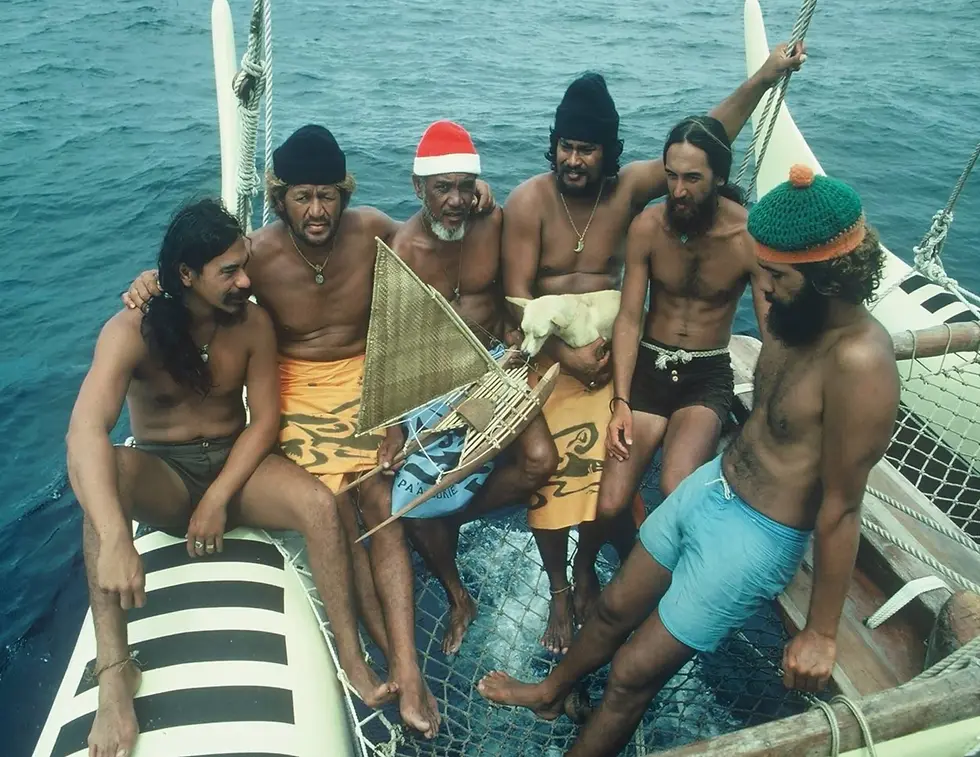
Makaliʻi began as a dream of his brother, Clay Bertelmann — a vision to build a double-hulled voyaging canoe for Shorty. That dream took root in a much earlier beginning, when Shorty sailed as a crew member on the 1976 maiden voyage of Hōkūleʻa to Tahiti under the guidance of his mentor, Papa Mau Piailug. Their pilina became part of a lineage that continues to guide us today.
Uncle Shorty carried a still, small voice — yet his knowledge felt vast, beyond this world. You had to lean in to hear him. And when you did, you understood that wisdom does not need volume.

In July 2025, as our crew repaired the mast of our canoe Makaliʻi, he was there — moving quietly through every detail. Long ago, Makaliʻi was first drafted on a napkin. And during this mast transition, when there was no paper nearby, he once again sketched his thoughts on a napkin. It felt like a full circle moment — a sign of transition, of pilina and aloha stretching across our past, present, and future.

Recently, as we gathered for a shakedown sail to test the new mast, he shared about his first visit to Ko'a Heiau Holomana with Papa Mau. He said Mau took a deep breath there, feeling the great mana of that place and the nearby Alenuihāhā Channel. Their bond is part of our beginning and what started this dream. From Hōkūleʻa to the sacred ceremonial building of our first-born canoe, Mauloa.
Though he is no longer physically with us, he is present in all the spaces we hold dear — in Waimea, Kawaihae, Kohala, Moku o Hawai’i, in the channel winds, and most of all in Makaliʻi herself.
We remember him in the simple things: his fanny pack, his truck, the way we would lean in closer so we could hear the ‘ike he was sharing. Because he said yes, we are here.


Comments